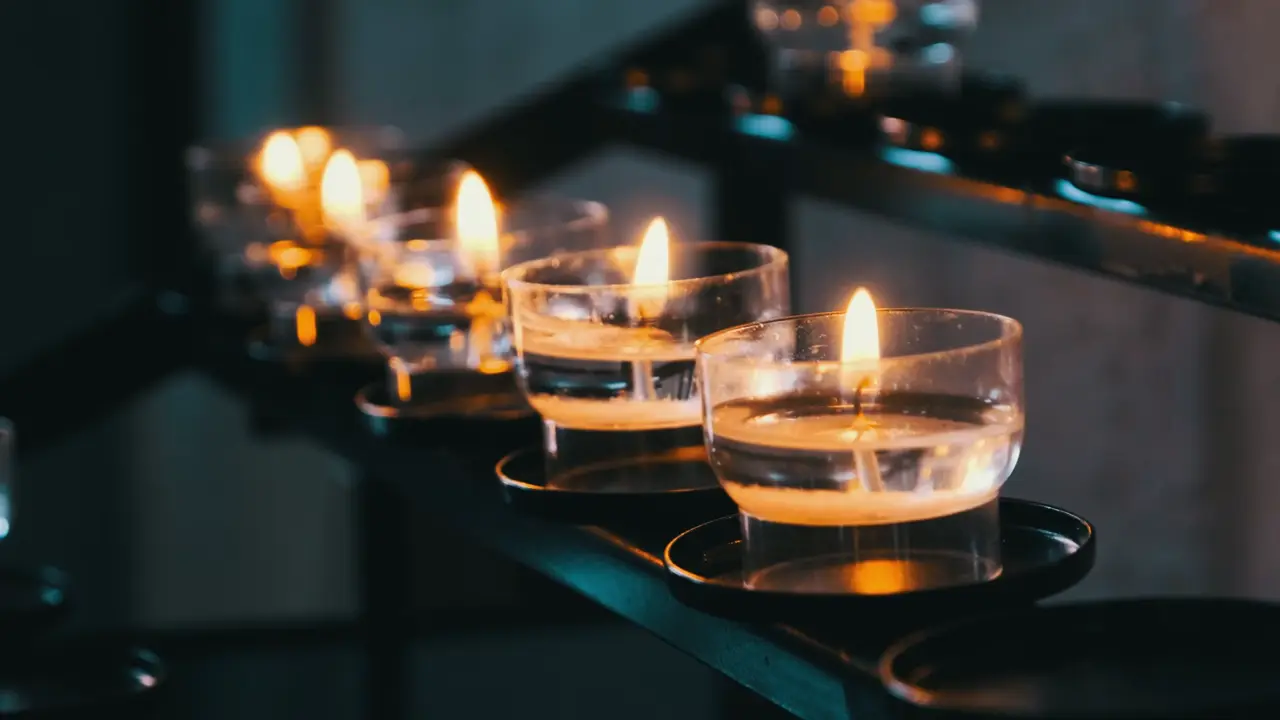
Short answer: A ritual is a small, deliberate act that gives your love and grief a place to go. At home, it can be as simple as lighting a candle, sharing a favorite meal or writing a letter. There is no right way. Choose what feels natural to you and your family.
This page offers general information and cannot replace professional care. If you are in crisis, call or text 988 (US Suicide and Crisis Lifeline).
Why do rituals help in grief?
Rituals give shape to feelings that are hard to name. They mark a moment, bring people together and give you something to do when words fail.
A ritual does not have to be religious. It does not have to be solemn, either. Laughter and favorite foods can be part of remembering.
If your faith has its own practices, such as prayers, candles, special meals or visits to a grave, you can do those at home as well. Ask your clergy if you want guidance.
What are simple rituals I can do alone or with family?
- Light a candle: place a candle near a photo and say the person's name. Blow it out when you are ready.
- Make a memory table: gather photos, a favorite mug, a book or a letter on a small table or shelf.
- Cook their favorite meal: share it, and tell stories while you eat.
- Write a letter: tell them what you wish you could say. Keep it, burn it safely or put it in a box.
- Play their music: listen together, or make a playlist.
- Take a walk: go to a place they loved and notice what they would have noticed.
- Plant something: a tree, a shrub or a pot of herbs, and care for it.
- Leave an empty chair at a holiday meal, or a place setting, with a note or flower.
How can children take part?
Children often grieve through play, drawing and action. Let them choose a role in a ritual. They might draw a picture, pick a flower or light the candle with an adult.
Use honest, simple words. Explain what you are doing and why, and let them leave if they wish. Keep it short and let them return to play. That is how many children grieve.
For more guidance, see our grief and family therapy section for children and teens.
How do I mark anniversaries and holidays?
Anniversaries and holidays can bring waves of grief. It helps to plan ahead, and to allow yourself to change the plan on the day.
- Decide how you want to spend the day. Alone, with family or with friends.
- Choose one small ritual, such as a candle, a toast or a visit to a place.
- Tell people what you need, so they are not guessing.
- Give yourself permission to cancel, change or end early.
- Afterward, take some quiet time.
Our after-life section has more ideas for anniversaries and remembrance.
How do I plan a ritual with a group?
A shared ritual can bring relatives and friends together. Keep it simple and clear so people know what to expect.
- Choose a time and place, such as an evening at home or a day at a favorite park.
- Tell people what will happen and how long it will take.
- Invite each person to share a memory, a word or a silence. Make sharing optional.
- Include one shared action, such as lighting candles or planting a seedling.
- End with something warm, such as food, music or a hug.
Be ready for tears and laughter. Both are welcome.
What if my family disagrees about rituals?
Families grieve differently. One person may want a candle and a prayer. Another may want to avoid anything solemn. Try to find a middle path, or let each person remember in their own way.
You could hold a short shared moment, then let people do their own thing. Respect those who prefer privacy. No one should be pushed to take part.
If there is conflict, our family guides on disagreements may help. A chaplain or counselor can also help families find a shared way to remember.
How do I keep rituals safe and simple?
Keep the plan small enough to carry out on a hard day. Use a candle in a sturdy holder, away from curtains and paper, and never leave it burning unattended. LED candles are a good choice for homes with children or pets.
If you plan to scatter ashes, plant a tree or place something at a public site, check local rules first. Our after-life guide on ashes explains common options and questions to ask. When in doubt, keep the ritual at home, where you have full control.
What can I do with the person's belongings?
Sorting belongings can be a ritual in itself. There is no deadline. Some people sort within weeks, while others wait a year or more. Take the time you need.
- Start with one small drawer or box, not a whole room.
- Keep a few items that feel alive with their presence, such as a scarf, a watch or a recipe card.
- Give some things to people who will use them, and tell the story as you hand them over.
- Say a few words, light a candle or play a song when you finish a section.
If it becomes too much, stop. Ask a friend to stay with you or take over for a while.
Frequently asked questions
Do I need to believe in anything for a ritual to help?
No. A ritual is simply a meaningful act. You can do it with or without religion.
What if a ritual makes me sadder?
Tears are common and often a relief. If it feels like too much, stop and try something gentler another day.
Is it okay to burn a letter or candle?
Yes, if you do it safely. Use a fireproof dish, keep water nearby and never leave a flame unattended.
How often should I do a ritual?
As often as it helps. Some people do one daily, others once a year.
Can a funeral home arrange clergy or a place of worship?
Funeral homes can often help you contact clergy or celebrants and may host services in their own chapel, but they do not replace a place of worship. If your family belongs to a congregation, contact the clergy early to learn about their policies, scheduling, and any fees. Some places of worship hold funerals for members only, while others welcome families who are not regular attendees but share the faith. What to ask: ask your clergy about available dates and requirements, and ask the funeral home whether they coordinate with the place of worship, music, and cemetery on the day.
Do all religions allow cremation?
No single answer applies to every religion, and practices vary by tradition and by community. Some faiths accept cremation, some discourage or limit it, and others leave the choice to the family. Different branches or congregations within the same religion may also hold different views. Because of this variation, it is best not to assume, and a respectful question to a faith leader is almost always welcome. What to do: ask your clergy member, faith leader, or a trusted elder about your tradition's guidance, and tell the funeral provider about any religious requirements so arrangements can respect them.
How soon after a death are funeral services held in different traditions?
Timing varies widely by tradition, family, and logistics, and there is no single rule. Some communities hold services within a day or two, while others wait several days to allow relatives to travel. Local laws, medical examiner involvement, and cemetery schedules can also affect timing. Because customs differ, check with your own community, and remember that many families adjust timing to fit travel and the availability of the officiant, the venue, and the cemetery. What to ask: ask your clergy or community leader about customary timing, tell the funeral provider early about any time preferences, and confirm what flexibility the provider and cemetery have.
How do I plan an interfaith funeral or memorial service?
An interfaith service blends elements from more than one tradition, and the key is open conversation with family and the people leading the service. Decide what matters most to your loved one and to each family member, such as readings, prayers, music, or rituals. Some officiants are experienced at interfaith ceremonies, and some venues are open to guest clergy. What to do: speak with one or two officiants about their approach, share a draft program with family before the day, and keep the service simple and respectful of each tradition represented.
Who can officiate a funeral if our family is not religious?
A funeral can be led by a clergy member, a celebrant, a funeral director, or a trusted family member or friend, depending on your wishes. Many families without a specific faith choose a professional celebrant who writes and leads a personal ceremony. Some funeral homes can recommend officiants, and some states have rules about who may sign legal documents. What to ask: ask the funeral home about officiant options and fees, ask each candidate about their approach and experience, and share stories about your loved one so the ceremony reflects their life.
What if family members hold different beliefs about the funeral?
When family members hold different beliefs, the most helpful approach is to listen to each person and look for elements everyone can accept. Start by identifying what your loved one wished, if known, and which parts of the service matter most to each relative. A neutral officiant, a private family moment, or two separate gatherings can sometimes help, and there is rarely only one right way to honor a person. What to do: hold a calm conversation before the funeral director meeting, write down shared priorities, and consider asking a trusted clergy member or family counselor to help find common ground.